Bricks, Mortar, and the New Zimbabwe: Inside the 2024-2026 Real Estate Boom
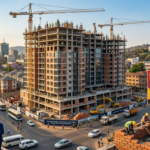
In the quiet, leafy suburbs of northern Harare, the sound of birdsong is increasingly being replaced by the rhythmic thud of pile drivers and the hum of cement mixers. For years, the narrative surrounding Zimbabwe was one of economic “survival.” However, between 2024 and 2026, a different story has emerged—one written in glass, steel, and high-quality face brick.
What began as a whisper in investment circles has become a thunderous reality: Zimbabwe is experiencing a real estate boom of unprecedented proportions. From the $60,000 “starter stands” in emerging peri-urban corridors to the $1 million villas in Borrowdale Brooke, the hunger for property has turned the country into one of the most active construction sites in Southern Africa.
1. The Genesis: Why Now?
To understand the boom, one must understand the unique psychology of the Zimbabwean investor. In an environment where the local currency has historically faced volatility, “bricks and mortar” represent the ultimate safe haven.
The “Store of Value” Phenomenon
For the Zimbabwean middle class and the corporate elite, real estate is not just about shelter; it is a savings account. With limited trust in traditional banking instruments over the past two decades, Zimbabweans have perfected the art of “incremental building.” This “cash-only” economy has created a market that is remarkably resilient to global interest rate hikes because it isn’t built on debt. It is built on hard-earned USD savings.
The Diaspora Engine
The single most powerful driver of this boom is the Zimbabwean Diaspora. Sending back over $1.4 billion annually in official remittances (and billions more through informal channels), the millions of Zimbabweans living in the UK, USA, Australia, and South Africa are no longer just sending “grocery money.” They are building retirement homes, investment flats, and commercial hubs.
2. Fascinating Example: The “New City” and Zim Cyber City
Perhaps the most visible symbol of this boom is the development in Mount Hampden. While Harare’s traditional Central Business District (CBD) struggles with congestion, the government and private investors have pivoted northwest.
Zim Cyber City: Dubai in Harare
In 2023, Mulk International broke ground on Zim Cyber City, a $500 million luxury “smart city” project. This is not just a housing complex; it is an integrated ecosystem.
- The Vision: Imagine a gated community where the utilities (water, power, and internet) are entirely independent of the municipal grid.
- The Opulence: The project includes Africa’s first inland “duty-free” mall, high-end restaurants, and villas that wouldn’t look out of place on the Palm Jumeirah in Dubai.
- The Impact: The mere presence of this project has caused land prices in Mount Hampden and surrounding areas like Nyabira and Gwebi to skyrocket. A stand that might have cost $10,000 five years ago is now fetching triple or quadruple that amount as investors bet on the “New City” becoming the seat of power and commerce.
3. The Rise of the “Cluster Home” and Gated Communities
The traditional “quarter-acre” suburban dream is being replaced by the “Cluster Home” revolution. Driven by a desire for security and shared infrastructure, developers are densifying the northern suburbs.
The Highlands and Borrowdale Shift
In areas like Highlands, Greendale, and Borrowdale, old colonial-era bungalows on 2-acre plots are being demolished. In their place, developers like WestProp and Vesta Properties are erecting 10 to 20 luxury townhouses on the same piece of land.
Example: Pomona City
Dubbed a “city within a city,” Pomona City represents the new gold standard in Zimbabwean urban planning. It introduces the concept of “Leasehold” and high-density luxury. Here, buyers aren’t just getting a house; they are getting manicured parks, world-class security, and a “walkable” neighborhood. The speed at which these “off-plan” units sell out—often within weeks of being announced—is a testament to the insatiable demand.
4. Beyond the Capital: Bulawayo and Victoria Falls
While Harare leads the charge, the boom is truly national.
Victoria Falls: The Tourism Hedge
In Victoria Falls, real estate has become a “blue chip” asset. With the town designated as a Special Economic Zone (SEZ), developers are rushing to build luxury holiday homes and short-term rental apartments (Airbnbs).
- Victoria Falls Estate: A new development offering contemporary duplexes and bungalows.
- The Airbnb Gold Mine: Investors are seeing yields of 10-12% in USD, far higher than they could achieve in Johannesburg or London, by catering to the post-pandemic surge in international tourism.
Bulawayo: The “Quiet” Resurgence
Bulawayo, the “City of Kings,” is seeing a different kind of growth. It has become the hub for educational real estate. With the growth of institutions like NUST and Solusi University, the demand for purpose-built student accommodation has created a new asset class. Old industrial buildings in Belmont are being reimagined as loft-style apartments and creative hubs.
5. The Infrastructure Catalyst: The Road to Modernity
Real estate doesn’t exist in a vacuum; it follows the roads. The massive government-led Emergency Road Rehabilitation Programme (ERRP), particularly the dualization of the Beitbridge-Harare-Chirundu highway, has unlocked “dormant” land.
The “Spillover” Towns
Towns like Norton, Ruwa, and Marondera are no longer seen as “far away.” As the roads improve, these have become dormitory towns for the middle class.
- Mabvazuva (Gazaland): This massive housing project in Ruwa has seen thousands of homes built in record time. It caters to the young professional who wants a modern, “Harare-style” home at a fraction of the cost.
- The “Sandton” of Zimbabwe: Near Mount Hampden, areas like Sandton and Fairview have seen a frantic “land grab” by the diaspora, leading to a sprawling suburb of diverse, often flamboyant architectural styles.
6. Commercial Real Estate: The Death of the CBD?
One of the most fascinating aspects of the boom is the “de-centralization” of commerce.
The “Office-to-Residential” Conversion
In the Harare CBD, high-rise office blocks are being converted into residential apartments or “small-scale” retail malls (popularly known as “malls” or “boutiques”). This reflects a shift where big corporates prefer “Office Parks” in the suburbs.
- Highland Park and Sam Levy’s Village: These open-air shopping malls are the new centers of commerce. The expansion of Highland Park in 2024/2025 created a new luxury retail corridor, attracting international brands and driving up the value of every residential property within a 5km radius.
7. The Risks: A Bubble or a Foundation?
Critics often ask: “Is this a bubble?” In most countries, a real estate boom is fueled by cheap credit. When the central bank raises interest rates, the bubble bursts.
In Zimbabwe, the “bubble” is made of cash. Since most houses are built over 5 to 10 years using “pay-as-you-go” construction, there is very little “forced selling.” However, the risks are real:
- Infrastructure Lag: In some areas, houses are going up faster than the sewer lines and water pipes.
- Land Scams: The “rumor of a boom” has attracted “land barons” who sell unserviced or illegally subdivided land, leading to heart-breaking stories of home demolitions.
- Title Security: The shift from “Cession” to “Title Deeds” remains a hurdle for many investors.
8. Conclusion: The Future of the Landscape
As we look toward the end of 2026, the Zimbabwean real estate industry has matured. We are seeing the emergence of REITs (Real Estate Investment Trusts) on the Zimbabwe Stock Exchange, allowing even small-scale investors to own a “piece” of a shopping mall for as little as $10.
The boom is more than just about money; it is a sign of a people reclaiming their space. Every new roof tile in Madokero, every glass facade in Mount Hampden, and every borehole drilled in a new gated estate is a vote of confidence in the country’s long-term future.
Zimbabwe is no longer just dreaming of a boom—it is living in one. For the savvy investor, the window is still open, but as the cranes continue to rise, the entry price is climbing every day.
Key Fascinating Stats:
- USD Yields: 6% to 10% (Compared to 3% in many Western markets).
- Diaspora Contribution: Estimated 40% of all new residential builds.
- Hot Spot: Mount Hampden (Projected 200% value increase by 2030).