The Mbare Liquidity Hub: Zimbabwe’s Unofficial Wall Street
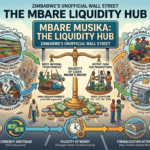 If you want to see the true pulse of the Zimbabwean economy, do not look at the high-rise bank headquarters in Harare’s CBD. Instead, head south to Mbare Musika and Magaba (Siyaso). Here, the air is thick with the smell of fresh produce, the clang of metalwork, and the invisible hum of millions of dollars changing hands every hour.
The sight of luxury SUVs—Range Rovers, Land Cruisers, and the latest Hiluxes—parked amidst the dust and chaos of Mbare is not a coincidence. It is a visual representation of the most liquid square mile in the country.
1. How Liquid is Mbare?
“Liquidity” in a formal sense refers to how quickly assets can be converted to cash. In Mbare, cash is the asset. Unlike the formal sector, which often grapples with bank limits and digital transfer delays, Mbare operates on a 100% USD cash-on-delivery basis.
The Estimates:
While hard data is difficult to track due to the “shadow” nature of the trade, economic analysts and historical surveys suggest that Mbare Musika alone processes between US$1.5 million and US$3 million daily (estimates, not real figures).
-
Musika (Produce): As the national distribution hub, almost every vegetable sold in a Zimbabwean supermarket or street corner passed through Mbare at 3:00 AM.
-
Magaba/Siyaso (Hardware & Spares): This is the industrial heart. From scotch carts to specialized automotive gears, if it’s made of metal or rubber, it’s traded here in hard currency.
2. The Luxury Car Paradox
Visitors are often baffled by the presence of “nice cars” in Mbare. These belong to three groups:
-
The Wholesalers: “Middlemen” who buy produce in bulk from rural farmers at Mbare and resell to formal retailers. Their margins are small per unit, but their volume is massive.
-
The “Siyaso” Industrialists: Artisans who have moved from “pavement welding” to large-scale informal manufacturing, supplying mines and farms across the country.
-
The Currency Arbitrageurs: Because Mbare is the primary entry point for USD into the city’s ecosystem, it naturally attracts those who trade in “liquidity” itself.
The cars are parked there because Mbare is where the velocity of money is highest. In finance, velocity is how many times a dollar changes hands in a year. In a formal bank, a dollar might sit for weeks. In Mbare, that same dollar might change hands five times before lunch.
3. Contribution to the National Economy
According to the ZIMSTAT 2025 Economic Census, over 76% of businesses in Zimbabwe are informal. Mbare is the “capital city” of this 76%.
A. The National Food Security Engine
Without Mbare, the formal retail chain would collapse. It provides the “price discovery” mechanism for the whole country. The price of a tomato in a fancy supermarket in Borrowdale is usually determined by the “morning price” at Mbare Musika.
B. Support for Rural Livelihoods
Mbare is the bridge between the rural farmer and the urban consumer. Estimates suggest that Mbare supports the livelihoods of over 500,000 smallholder farmers by providing a guaranteed (albeit chaotic) market for their goods.
C. The “Mattress Bank” Reserve
By keeping USD in constant circulation, Mbare prevents the economy from grinding to a halt during periods of local currency volatility. It acts as a “de facto” reserve bank for the informal sector.
4. Why the Government is Watching
The government’s “Mbare Musika Model” (currently being rolled out nationally in 2026) is an attempt to “formalize the informal.” By building state-of-the-art facilities with fire hydrants and paved bays, the state hopes to finally bring this liquidity into the tax net.
| Impact Category | Contribution Detail |
| Employment | Directly/Indirectly supports ~1 million jobs |
| Daily Cash Flow | Estimated US$2M+ (All cash) |
| Trade Role | National hub for 80% of fresh produce |
| Manufacturing | Primary source of informal industrial spares |
Conclusion: The Real Giant
Mbare isn’t just a marketplace; it’s a financial institution without walls. The “nice cars” are just the tip of the iceberg—they represent the massive wealth generated by a sector that has mastered the art of survival in a volatile economy. Mbare is liquid because it is essential. You can skip the mall, but you cannot skip the food and tools that come from Mbare.