As Zimbabwe moves deeper into 2026, the fiscal landscape is being reshaped by the Finance Act (No. 7) of 2025. Two of the most talked-about pillars of this legislation are the aggressive incentives for Business and Knowledge Process Outsourcing (BPO/KPO) and the strategic push toward a “24-Hour Economy.”
The following article explores how these measures aim to transform Zimbabwe into a regional service hub, the hurdles they face, and whether they truly have the power to jumpstart the economy.
The Dawn of a 24-Hour Economy: Zimbabwe’s New Fiscal Frontier
For decades, Zimbabwe’s economic pulse has largely slowed to a crawl after sunset. However, the 2026 National Budget has signaled a paradigm shift. By introducing targeted tax breaks for companies that operate “round-the-clock,” the government is attempting to decouple economic growth from the traditional 9-to-5 workday.
1. The BPO/KPO Incentive Package: A “Service Export” Engine
The most concrete expression of this shift is found in the incentives for the BPO and KPO sectors. These businesses—which handle call centers, technical support, and data processing for international clients—are natural candidates for a 24-hour cycle due to global time zone differences.
Key Benefits of the BPO Incentives:
-
Reduced Corporate Tax: Qualifying BPO firms pay a flat 15% Corporate Tax rate, significantly lower than the standard 25%.
-
The YETI Credit: Under the Youth Employment Tax Incentive (YETI), companies receive a $1,500 USD annual tax credit for every additional employee under the age of 30.
-
Infrastructure Support: Firms enjoy 100% capital allowances in their first year of operation, allowing them to deduct the full cost of computers, servers, and office equipment immediately.
-
Expatriate Perks: To attract global expertise, essential foreign specialists in this sector are taxed at a flat 15% personal rate.
2. Negatives and Implementation Risks
While the incentives look “gold-plated” on paper, several structural “negatives” threaten to undermine their effectiveness:
-
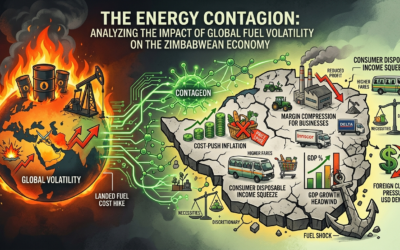
The “Energy Deficit” Tax: A 24-hour economy requires 24-hour power. For many firms, the tax savings are currently being eaten up by the high cost of running diesel generators or industrial-scale battery backups during persistent load-shedding.
-
Safety and Logistics Costs: Moving staff safely at 2 AM in cities like Harare or Bulawayo requires private shuttle services and enhanced security, costs that the current tax credits may not fully cover for smaller players.
-
The Global Minimum Tax (DMTT): Under the new Domestic Minimum Top-Up Tax, if a large multinational’s effective tax rate falls below 15% due to these incentives, Zimbabwe will now charge a “top-up” to hit that 15% floor. This effectively limits how much “holiday” a big corporation can actually enjoy.
3. Will it Boost the Economy?
The initiative’s success depends on whether it can move beyond “pilot” sectors like BPOs into manufacturing and retail.
The Case for “Yes”:
If successful, the 24-hour economy could increase GDP by an estimated 0.5% to 1.2% annually simply by maximizing the utility of existing infrastructure. It transforms “dead time” into productive hours, creates thousands of entry-level digital jobs for graduates, and increases foreign currency inflows through service exports.
The Case for “Caution”:
Critics argue that without a simultaneous fix to the power grid and public lighting, these incentives may only benefit a small “enclave” of high-end tech firms rather than the broader manufacturing base. Furthermore, the 0.5% increase in VAT (now 15.5%)—introduced to balance the budget—may dampen local consumer demand, potentially offsetting the gains from increased night-time production.
Summary Table: 24-Hour & BPO Incentives
| Feature | Benefit | Negative/Constraint |
| Corporate Tax | 15% (vs 25% standard) | Only applies to specific “export” services. |
| Youth Credit | $1,500 per new young hire | High administrative burden to claim. |
| Duty Waivers | 0% on BPO equipment & E-buses | Does not cover fuel for generators. |
| Night Shift Perks | Accelerated depreciation on machinery | Requires 24/7 security and transport. |
The Verdict
The Finance Act No. 7 of 2025 provides the “legal skeleton” for a modern, service-driven economy. However, for the 24-hour initiative to truly boost the economy, the government must now provide the “flesh”—reliable electricity and safe urban infrastructure. Without these, the tax incentives may remain a brilliant idea trapped in a dark room.
Other Shifts
Actually, there are some high-stakes exemptions for the Mutapa Investment Fund that have stirred up quite a bit of debate, while the incentives for the 24-hour economy are more targeted toward specific growth sectors.
1. Mutapa Investment Fund (MIF) Exemptions
The Mutapa Investment Fund (Zimbabwe’s Sovereign Wealth Fund) has been granted sweeping tax exemptions to allow it to “recapitalize and grow” the state-owned enterprises under its wing.
-
Income Tax Exemption: The receipts and accruals of the Fund itself are now exempt from Corporate Income Tax.
-
Capital Gains Tax (CGT): The Fund is exempt from CGT on the sale or transfer of its assets. This is significant because the MIF manages massive holdings in mining, energy, and telecommunications.
-
Shareholder & Interest Taxes: It is exempt from Resident Shareholders’ Tax and Non-Resident Tax on Fees.
-
IMTT Waiver: Crucially, the transfer of funds between the Mutapa Investment Fund, the Government, and its subsidiaries is exempt from the 2% (USD) / 1.5% (ZiG) IMTT.
The “Catch”: The 15% Global Minimum Tax
If you are looking at these incentives for a large multinational company, keep an eye on the new Domestic Minimum Top-Up Tax (DMTT).
Starting January 1, 2026, if a high-earning foreign entity’s “effective tax rate” in Zimbabwe falls below 15% (even because of these incentives), Zimbabwe will now charge a “top-up tax” to bring it back to 15%. This is to ensure that taxes are collected locally rather than by the company’s home country.