Zimbabwe’s 2026 Monetary Policy Explained
The 2026 Monetary Policy Statement (MPS), presented by the Reserve Bank of Zimbabwe (RBZ) Governor John Mushayavanhu today, February 27, 2026, focuses on a strategy of “staying the course.” After a period of significant economic adjustment, the central bank’s primary message is one of consolidation: protecting the gains made in price stability and ensuring inflation remains firmly anchored.
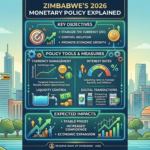
For the average Zimbabwean, the technical language of a Monetary Policy Statement can feel daunting. Below is a breakdown of the key takeaways in plain language, explaining how these policies directly affect your wallet and the broader economy.
1. The Big Number: The Bank Policy Rate (35%)
The Bank Policy Rate is essentially the “interest rate of interest rates.” It is the benchmark rate at which the Reserve Bank lends money to commercial banks.
-
The Decision: The Governor has decided to maintain the policy rate at 35%.
-
What this means for you: When the central bank keeps this rate high, it is a deliberate move to discourage excessive borrowing and keep “hot” money out of the economy. Think of it as the central bank applying the brakes on the economy to prevent inflation from spiraling out of control.
-
The Example: If you are looking for a bank loan for your business, the interest you pay is largely influenced by this 35% benchmark. Because the rate is held high, borrowing remains relatively expensive. This is designed to ensure that only productive, essential projects get funded, rather than speculative spending that could weaken the local currency (ZiG).
2. Bank Charges: The Push for Affordability
One of the most welcome developments for the common person is the Governor’s firm stance on bank charges.
-
The Problem: Many consumers and small businesses have complained that the cost of simply maintaining an account or moving money is too high, often discouraging people from using formal banking channels.
-
The Directive: The Governor has urged commercial banks to review and reduce their fee structures. The logic is simple: if banking is affordable, more people will keep their money in the bank. This increases the total pool of savings available for banks to lend out, which in turn grows the economy.
-
The Example: Imagine you are a small-scale trader. If you pay a high fee every time you swipe your card or transfer money via a digital platform, you are likely to prefer dealing in cash. By lowering these fees, the bank is making it cheaper for you to use digital payments, which is safer, more transparent, and helps the government track economic activity more effectively.
3. Inflation and Price Stability
The 2026 statement highlights that inflation has slowed significantly, reaching 3.8% year-on-year in February.
-
The Goal: The central bank wants to reach single-digit inflation consistently. Keeping the policy rate at 35% is the tool they are using to “anchor” these expectations.
-
Why it matters: When inflation is high, the value of your paycheck shrinks every month. At 3.8%, the economy is in a much more stable position than in previous years. This allows for better long-term planning for both households and businesses.
4. Key Takeaways for Businesses and Exporters
While the focus is on stability, the MPS remains cautious regarding liquidity.
-
Retention Rates: The central bank continues to manage foreign currency retention rates to ensure there is enough liquidity in the interbank market to support the “Willing-Buyer Willing-Seller” (WBWS) system.
-
The Strategy: By keeping these mechanisms in place, the RBZ aims to ensure that exporters can access the foreign currency they need for operations while simultaneously building up the nation’s reserve buffers.
Summary Table: What to Expect
| Feature | Status | Impact on You |
| Policy Rate | Maintained at 35% | Borrowing remains expensive; helps keep inflation low. |
| Bank Charges | Under pressure to drop | Potential for lower monthly service fees and transaction costs. |
| Inflation | Decelerating (3.8%) | More predictable prices for goods and services. |
| Monetary Stance | Tight / Prudent | Focus on protecting the ZiG and avoiding currency volatility. |
Final Thoughts
The 2026 Monetary Policy Statement is not a time for radical shifts. It is a “steady-as-she-goes” approach. The Governor is betting that by keeping interest rates high and pushing banks to lower their transaction fees, the economy will reach a point of “macroeconomic convergence”—a fancy way of saying that the value of the currency will stabilize, inflation will stay low, and everyday transactions will become more affordable.
For the average citizen, the immediate takeaway is to watch for how your specific bank reacts to the Governor’s call to lower charges. If they comply, we should see a reduction in the “cost of doing business” at the personal level in the coming months.