The Capitalization Paradox: Did Zimbabwe’s Inflationary Reporting Undervalue the Nation’s Real Assets?
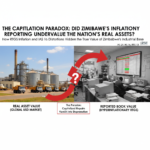 The Zimbabwean economic landscape, particularly between 2018 and 2024, serves as a living laboratory for accounting theory. During the era of the RTGS dollar (Real Time Gross Settlement), companies navigated a hyperinflationary environment that forced them to stretch the boundaries of the IFRS Conceptual Framework.
A peculiar phenomenon emerged during this time: as inflation eroded the value of the currency, companies began capitalizing repairs and maintenance costs that would typically be expensed. While critics might argue this “padded” the balance sheets, a deeper dive into IAS 16, IAS 29, and the Conceptual Framework suggests that this practice, combined with reporting lags, actually contributed to a massive undervaluation of assets.
1. The Reporting Context: RTGS and the IAS 29 Shield
To understand the undervaluation, we must first look at the reporting tool used: IAS 29 (Financial Reporting in Hyperinflationary Economies).
Under IAS 29, financial statements are restated in terms of the measuring unit current at the balance sheet date. However, the “measuring unit” (the CPI) often lagged behind the actual market replacement cost of specialized industrial assets.
The Conceptual Framework Perspective
The Conceptual Framework for Financial Reporting emphasizes two qualitative characteristics: Relevance and Faithful Representation.
-
Relevance: In the RTGS era, historical cost was irrelevant.
-
Faithful Representation: If a company reports a tractor at its 2018 RTGS cost, it is no longer a faithful representation of that asset’s economic reality in 2023.
2. The Capitalization of Repairs: Asset or Expense?
Under IAS 16 (Property, Plant, and Equipment), the criteria for capitalization are strict. An item is recognized as an asset only if:
-
It is probable that future economic benefits associated with the item will flow to the entity.
-
The cost of the item can be measured reliably.
Why Zimbabwean Firms Capitalized Repairs
In a stable economy, replacing a gearbox in a truck is “maintenance” (an expense). In the Zimbabwean RTGS era, getting that gearbox often involved:
-
Sourcing scarce foreign currency at a premium.
-
High logistics costs due to fuel shortages.
-
Extensive “overhauling” because new machinery was unaffordable.
Companies argued that these were not mere “repairs” but “enhancements” that extended the useful life of the asset beyond its original expectations. Under the Conceptual Framework, an asset is a “present economic resource controlled by the entity as a result of past events.” By overhauling old machinery, firms were essentially creating a “new” resource.
3. The Paradox: Why Capitalization Led to Undervaluation
One would think that adding repair costs to the value of an asset would make the asset’s value go up (overvaluation). However, in the ZSE context, it had the opposite effect for three reasons:
A. The “Vanishment” of Value via Depreciation
When you capitalize a repair into a “Cost” bucket that is being decimated by hyperinflation, the subsequent depreciation (calculated on that inflated cost) often outpaces the nominal growth of the asset’s value.
-
Example: If a company spent 1 million RTGS on a “repair-asset,” by the time the audit was finished, that 1 million RTGS was worth 1/10th of its value in USD terms, yet the asset remained pegged to a depreciating RTGS schedule.
B. IAS 36 Impairment Fears
Because auditors were wary of “padded” balance sheets due to capitalized repairs, they were aggressive with IAS 36 (Impairment of Assets). Companies were often forced to write down these “repair-heavy” assets to a “Recoverable Amount” based on conservative RTGS cash flow projections, further depressing the reported value.
C. The Distortion of the “Carrying Amount”
The Carrying Amount in RTGS terms never truly reflected the Fair Value (IFRS 13). Because the RTGS was losing value faster than the accounting software could revalue the assets, the “Undervaluation” sentiment grew. The capitalized repairs were “drops in a bucket” compared to the massive real-world appreciation of the underlying land and hardware.
4. Impact on Financial Reporting & Investor Perception
The result of this accounting tug-of-war was a set of financial statements that many investors found “unreadable.”
| Accounting Treatment | Intent | Resulting Distortion |
| Capitalizing Maintenance | Preserve the “Value” of the asset on the book. | Created “cluttered” fixed asset registers with no market equivalence. |
| IAS 29 Restatement | Reflect inflation in the numbers. | Often used official CPI rates that were lower than “street” inflation, leading to understated assets. |
| RTGS Reporting | Compliance with local law. | Made the company look smaller in USD terms than its regional peers. |
5. Conclusion: A Case of “Missing” Value
Does the capitalization of repairs mean the assets were overvalued? No. When we apply the IFRS Conceptual Framework, we see that the true value of an entity is its ability to generate future economic benefits. Zimbabwean companies continued to produce goods, move freight, and sell services using assets that were “repaired” into immortality.
The fact that these assets were reported in a dying currency (RTGS) meant that even with capitalized repairs, the Book Value was a mere fraction of the Replacement Value. The market’s sentiment that ZSE companies are undervalued is a direct result of this era: the reporting captured the costs of the past but failed to capture the economic power of the physical assets in the present.