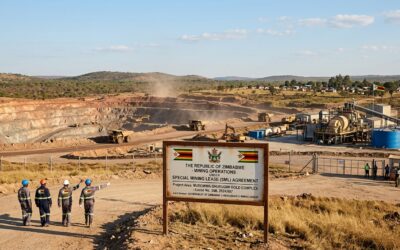
Determination of Additional Profits Tax (APT) in Respect of Special Mining Lease Areas in Zimbabwe
Mining is a primary economic pillar in Zimbabwe, contributing significantly to export earnings, foreign direct investment, and government revenue. Because mineral deposits are finite, non-renewable natural assets, governments worldwide construct fiscal regimes designed to balance two competing goals: attracting high-risk capital from international investors and securing a fair share of economic rent for the nation.
In Zimbabwe, this fiscal policy is realized through a dual-tax framework for mega-mining projects holding a Special Mining Lease (SML). Holders of an SML benefit from concessional baseline Corporate Income Tax (CIT) rates (currently fixed at a concessionary 15%, compared to the standard corporate tax rate of 25%). However, to ensure that the State captures a fair share of extraordinary profits during periods of high commodity prices or exceptional operational efficiency, Zimbabwean tax law imposes a progressive Additional Profits Tax (APT).
APT functions as a Resource Rent Tax (RRT). Unlike standard corporate tax, which is levied on accounting or tax profits calculated on an accrual basis, APT is levied on net cumulative cash flows exceeding predefined rates of return (threshold returns) on invested capital.
We are now unpacking the determination of APT for Special Mining Lease Areas under the Income Tax Act [Chapter 23:06] and the Finance Act [Chapter 23:04], provides step-by-step practical calculations, and reviews relevant judicial precedents from Zimbabwean and Commonwealth jurisprudence.
1. Legislative Framework Governing Mining and APT
The fiscal administration of Special Mining Lease Areas in Zimbabwe rests on three statutory pillars:
- The Mines and Minerals Act [Chapter 21:05] (Part XIX): Establishes the legal criteria for obtaining a Special Mining Lease. SMLs are typically granted for large-scale mining operations requiring investment in excess of specified capital thresholds (historically USD 100 million or equivalent) with long production lifespans.
- The Income Tax Act [Chapter 23:06]:
- Section 33: Formally charges Additional Profits Tax on persons holding a Special Mining Lease Area.
- The Twenty-Second Schedule: Details the rules, definitions, formulas, and mechanics for calculating Net Cumulative Cash Flow (NCCF) and determining APT liability.
- Section 15(2)(a) & Fourth Schedule: Regulate allowable deductions, mining capital allowances, and unredeemed capital expenditure.
- The Finance Act [Chapter 23:04]:
- Section 14 & Schedule to Chapter I: Prescribe the tax rates for SML holders, including the 15% concessionary corporate income tax rate and the statutory APT threshold rates and tax percentages.
- Section 4A: Regulates the currency of tax settlement (USD vs. local currency ZiG/ZWL).
2. Theoretical Principles of Additional Profits Tax (APT)
To understand how APT works, one must distinguish between Corporate Income Tax (CIT) and a Resource Rent Tax (RRT).
| Feature | Corporate Income Tax (CIT) | Additional Profits Tax (APT) |
| Tax Base | Accounting/Taxable Profit (Revenue less allowable revenue expenses and depreciated capital allowances). | Net Cumulative Positive Cash Flow exceeding threshold rates of return. |
| Capital Expenses | Capitalized and deducted over time via depreciation or annual redemption allowances. | Immediate full deduction (expensed 100% in the year cash is spent). |
| Timing | Paid annually whenever taxable income is positive. | Deferred until the project has fully recovered all capital investment plus a minimum rate of return. |
| Economic Goal | Regular revenue generation for public spending. | Capturing “super-normal” economic rents during windfall profit years. |
How the Threshold Mechanism Works
The Zimbabwean APT system employs a two-tier threshold mechanism:
- Tier 1 Threshold Return: The cumulative invested capital is accumulated annually at an agreed baseline compound interest rate (e.g., 15% or 20% per annum). Until the mine generates enough positive cash flow to repay all past investments plus this 15% compound return, no Tier 1 APT is payable. Once positive cash flow exceeds this threshold, Tier 1 APT (e.g., 50%) is triggered on the excess cash flow.
- Tier 2 Threshold Return: A higher rate of return (e.g., 25% or 30% per annum). Once the mine’s cumulative profits exceed this secondary threshold, a higher Tier 2 APT rate (e.g., 75%) applies to the surplus, replacing or supplementing the Tier 1 calculation.
This structure protects investors by ensuring they earn their target return on capital before heavy windfall taxes apply.
3. Detailed Mechanics under the Twenty-Second Schedule
The Twenty-Second Schedule of the Income Tax Act [Chapter 23:06] outlines the step-by-step formula for calculating APT.
Step 1: Defining the Special Mining Lease Area (Ring-Fencing)
Under paragraph 2 of the Twenty-Second Schedule, APT is determined on a ring-fenced basis for each SML area. A mining company cannot mix revenues or capital expenditures from an SML area with non-SML areas or separate lease areas. If a taxpayer operates two separate SML areas, each must maintain independent APT ledger calculations.
Step 2: Determining Net Annual Cash Flow
For any given year of assessment (Year t), the Net Cash Flow (NCF_t) is calculated using the following formula:
Net Cash Flow = Gross Cash Receipts - Allowable Cash Outflows
A. Gross Cash Receipts Include:
- All proceeds from the sale of minerals extracted from the SML area.
- Recoupments of capital expenditure (e.g., proceeds from selling used mining machinery or land).
- Revenue subsidies or indemnification payments directly linked to the mining operations.
- Any other income derived directly from operations in the lease area.
B. Allowable Cash Outflows Include:
- Operating Expenses: Actual cash incurred during the year for mining, processing, administration, and marketing.
- Capital Expenditure: 100% of actual cash spent on capital assets (mining equipment, shaft sinking, processing plants, infrastructure) during that year.
- Royalties Paid: Royalties remitted to the State under Chapter VII of the Finance Act.
- Corporate Income Tax Paid: The actual baseline Corporate Income Tax (15% + 3% AIDS Levy) paid to ZIMRA in respect of the SML area for that year.
- Exclusions: Non-cash charges such as depreciation, provisions for bad debts, and unrealized exchange losses are excluded from cash outflows. Interest on foreign loans is also generally excluded or restricted to prevent profit-shifting through thin capitalization.
4. Accumulation Factors and Multi-Tier Formulas
If the Net Cash Flow for Year t is negative (which is typical during exploration, construction, and initial development phases), the negative balance is carried forward to Year t+1.
To reflect the time value of money and the investor’s cost of capital, the opening negative balance of cumulative cash flow is multiplied by an Accumulation Factor.
The Accumulation Factor Formula
The Accumulation Factor (AF) for a threshold rate (r) is expressed as:
AF = 1 + r
Where:
r= The statutory or contractually agreed threshold rate of return (e.g., 15% or 0.15).
Calculating Net Cumulative Cash Flow (NCCF)
The formula for Net Cumulative Cash Flow at the end of Year t (NCCF_t) is:
NCCF(t) = [NCCF(t-1) * (1 + r)] + NCF(t)
Where:
NCCF(t-1)is the Net Cumulative Cash Flow from the end of the previous year.NCF(t)is the Net Annual Cash Flow earned or spent in the current year.
Rules of Taxability:
- If NCCF_t is Negative: The project has not yet recovered its initial investment plus the threshold return. APT liability is zero (0). The negative NCCF_t is carried forward into Year t+1 and will continue to accumulate interest.
- If NCCF_t is Positive: The project has fully recovered its investment plus the threshold return. The positive balance represents “excess profits” or “rent.” APT is levied on this positive amount.
- Resetting the Base: Once a positive balance is taxed, the cumulative cash flow account for that tier is reset to Zero (0) for the start of the next year, so that the same profits are not taxed twice.
5. Comprehensive Step-by-Step Practical Example
To bring these principles to life, let us examine a detailed, realistic scenario involving a fictional mining enterprise operating in Zimbabwe.
Scenario Profile: “Great Dyke Platinum Mining (Pvt) Ltd”
- Status: Special Mining Lease Holder.
- Applicable Corporate Tax Rate: 15% (concessionary rate under SML).
- AIDS Levy: 3% of Corporate Tax payable (effective CIT rate = 15.45%).
- Tier 1 APT Threshold Rate (r1): 15% per annum (
AF1 = 1.15). - Tier 1 APT Tax Rate: 50%.
- Tier 2 APT Threshold Rate (r2): 25% per annum (
AF2 = 1.25). - Tier 2 APT Tax Rate: 20% additional tax (or 70% total effective tax rate on top tier).
Project Financial Data (Years 1 to 5)
All figures in millions of United States Dollars (USD millions).
Year 1 (Mine Construction & Development Phase)
- Gross Revenue: USD 0
- Operating Cash Expenses: USD 10 million
- Capital Expenditure (Plant, Machinery, Shafts): USD 100 million
- Royalties Paid: USD 0
- Baseline Corporate Tax Paid: USD 0
Year 2 (Initial Production Phase)
- Gross Revenue: USD 50 million
- Operating Cash Expenses: USD 25 million
- Capital Expenditure: USD 20 million
- Royalties Paid (2.5%): USD 1.25 million
- Baseline Corporate Tax Paid: USD 0 (offset by unredeemed capital allowances for CIT purposes)
Year 3 (Ramp-up to Full Production)
- Gross Revenue: USD 150 million
- Operating Cash Expenses: USD 45 million
- Capital Expenditure: USD 10 million
- Royalties Paid (5%): USD 7.5 million
- Baseline Corporate Tax Paid: USD 5 million
Year 4 (High Commodity Price Boom)
- Gross Revenue: USD 300 million
- Operating Cash Expenses: USD 60 million
- Capital Expenditure: USD 15 million
- Royalties Paid (5%): USD 15 million
- Baseline Corporate Tax Paid: USD 30 million
Year 5 (Steady-State Operations)
- Gross Revenue: USD 280 million
- Operating Cash Expenses: USD 65 million
- Capital Expenditure: USD 10 million
- Royalties Paid (5%): USD 14 million
- Baseline Corporate Tax Paid: USD 28 million
Step-by-Step APT Calculations
YEAR 1 CALCULATION
- Calculate Net Annual Cash Flow (NCF1):
- Gross Revenue = USD 0
- Cash Outflows = USD 10m (Operating) + USD 100m (Capital) = USD 110m
NCF1 = 0 - 110 = -USD 110 million
- Calculate Net Cumulative Cash Flow (NCCF1) for Tier 1:
- Opening Balance = USD 0
NCCF1 = [0 * 1.15] + (-110) = -USD 110 million
- APT Tax Liability for Year 1:
- Since NCCF1 is negative (-USD 110m), Tier 1 APT = USD 0.
- Balance carried forward to Year 2 = -USD 110 million.
YEAR 2 CALCULATION
- Calculate Net Annual Cash Flow (NCF2):
- Gross Revenue = USD 50 million
- Cash Outflows = USD 25m (Ops) + USD 20m (CapEx) + USD 1.25m (Royalties) + USD 0 (CIT) = USD 46.25 million
NCF2 = 50 - 46.25 = +USD 3.75 million
- Calculate Net Cumulative Cash Flow (NCCF2) for Tier 1:
- Opening Balance from Year 1 accumulated at 15%:
-USD 110 million * 1.15 = -USD 126.5 million - Add Year 2 Net Cash Flow:
NCCF2 = -126.5 + 3.75 = -USD 122.75 million
- Opening Balance from Year 1 accumulated at 15%:
- APT Tax Liability for Year 2:
- Since NCCF2 is negative (-USD 122.75m), Tier 1 APT = USD 0.
- Balance carried forward to Year 3 = -USD 122.75 million.
YEAR 3 CALCULATION
- Calculate Net Annual Cash Flow (NCF3):
- Gross Revenue = USD 150 million
- Cash Outflows = USD 45m (Ops) + USD 10m (CapEx) + USD 7.5m (Royalties) + USD 5m (CIT) = USD 67.5 million
NCF3 = 150 - 67.5 = +USD 82.5 million
- Calculate Net Cumulative Cash Flow (NCCF3) for Tier 1:
- Opening Balance from Year 2 accumulated at 15%:
-USD 122.75 million * 1.15 = -USD 141.1625 million - Add Year 3 Net Cash Flow:
NCCF3 = -141.1625 + 82.5 = -USD 58.6625 million
- Opening Balance from Year 2 accumulated at 15%:
- APT Tax Liability for Year 3:
- Since NCCF3 remains negative (-USD 58.6625m), Tier 1 APT = USD 0.
- Balance carried forward to Year 4 = -USD 58.6625 million.
YEAR 4 CALCULATION (The Windfall Profit Year)
- Calculate Net Annual Cash Flow (NCF4):
- Gross Revenue = USD 300 million
- Cash Outflows = USD 60m (Ops) + USD 15m (CapEx) + USD 15m (Royalties) + USD 30m (CIT) = USD 120 million
NCF4 = 300 - 120 = +USD 180 million
- Calculate Net Cumulative Cash Flow (NCCF4) for Tier 1:
- Opening Balance from Year 3 accumulated at 15%:
-USD 58.6625 million * 1.15 = -USD 67.461875 million - Add Year 4 Net Cash Flow:
NCCF4 = -67.461875 + 180 = +USD 112.538125 million
- Opening Balance from Year 3 accumulated at 15%:
- Determine Tier 1 APT Liability for Year 4:
- NCCF4 is positive by USD 112.538125 million.
- Tier 1 APT Payable =
112.538125 million * 50% = USD 56.2690625 million(approx. USD 56.27 million).
- Resetting the Ledger for Year 5:
- Because the positive cash flow of USD 112.538125 million was subjected to APT, the cumulative cash flow account is reset to USD 0 at the end of Year 4.
YEAR 5 CALCULATION (Post-Payback Production)
- Calculate Net Annual Cash Flow (NCF5):
- Gross Revenue = USD 280 million
- Cash Outflows = USD 65m (Ops) + USD 10m (CapEx) + USD 14m (Royalties) + USD 28m (CIT) = USD 117 million
NCF5 = 280 - 117 = +USD 163 million
- Calculate Net Cumulative Cash Flow (NCCF5) for Tier 1:
- Opening Balance from Year 4 = USD 0 (since it was reset).
NCCF5 = (0 * 1.15) + 163 = +USD 163 million
- Determine Tier 1 APT Liability for Year 5:
- Since the project has fully recovered past investments, all future net positive cash flows are subject to APT.
- Tier 1 APT Payable =
163 million * 50% = USD 81.5 million.
Summary Table of APT Calculations (USD Millions)
| Year | Gross Revenue | Operating & CapEx Outflows | Royalties & CIT Paid | Net Annual Cash Flow (NCF) | Opening NCCF (Accrued @ 15%) | Ending NCCF | APT Payable (50%) |
| Year 1 | 0.00 | 110.00 | 0.00 | -110.00 | 0.00 | -110.00 | 0.00 |
| Year 2 | 50.00 | 45.00 | 1.25 | +3.75 | -126.50 | -122.75 | 0.00 |
| Year 3 | 150.00 | 55.00 | 12.50 | +82.50 | -141.16 | -58.66 | 0.00 |
| Year 4 | 300.00 | 75.00 | 45.00 | +180.00 | -67.46 | +112.54 | 56.27 |
| Year 5 | 280.00 | 75.00 | 42.00 | +163.00 | 0.00 | +163.00 | 81.50 |
6. Currency of Assessment and Multi-Currency Complexities
A critical issue in Zimbabwean tax administration is the currency of payment for mining taxes. Under Section 4A of the Finance Act [Chapter 23:04], taxpayers who earn revenue in foreign currency must settle their tax obligations in foreign currency.
Dual-Currency Framework & Section 4A Mechanics
- Currency Matching Principle: If a Special Mining Lease holder sells minerals in United States Dollars (USD), both the baseline Corporate Income Tax and the Additional Profits Tax must be calculated and remitted in USD.
- Recent Legislative Adjustments: The Finance Act has evolved through various legislative instruments (including Act 8 of 2020, Act 10 of 2022, and Act 7 of 2024). Under current rules:
- Where a mining corporate receives or accrues more than 50% of its total income in foreign currency, tax accounting must reflect the prescribed statutory ratios or foreign currency portion.
- Converting local currency transactions to foreign currency for APT cumulative ledgers requires applying the official market exchange rate prevailing on the date the transaction occurred.
7. Relevant Case Law and Judicial Precedents
To fully appreciate the legal enforcement and interpretation of mining taxation in Zimbabwe, one must examine key court rulings from Zimbabwean courts as well as foundational Commonwealth income tax cases.
A. Zimbabwean Precedents
1. Zimbabwe Platinum Mines (Pvt) Ltd (Zimplats) v Zimbabwe Revenue Authority (ZIMRA) (HH 845-22 / SC 543-19)
- Legal Issue: Enforceability of tax stabilization provisions in Special Mining Lease agreements versus subsequent amendments to the Finance Act and Income Tax Act.
- Background: Zimplats entered into a Special Mining Lease Agreement with the Government of Zimbabwe, which included fixed corporate tax rates and specific APT calculation mechanisms designed to protect the investor from adverse tax changes. ZIMRA later issued assessments imposing higher statutory rates based on statutory amendments.
- Court Ruling: The High Court and Supreme Court addressed the legal hierarchy between private fiscal stabilization contracts and parliamentary taxing Acts. The judiciary reaffirmed that while Parliament retains absolute legislative power to pass tax laws, validly executed government agreements under the Mines and Minerals Act create legitimate expectations and contractual commitments that require clear statutory reconciliation. This case highlights the importance of aligning SML agreements with the provisions of the Finance Act.
2. Unki Mines (Pvt) Ltd v ZIMRA & Stanbic Bank (HH 729-22)
- Legal Issue: Liability to pay mining royalties and taxes in foreign currency versus local currency under Section 4A of the Finance Act.
- Ruling: The High Court confirmed that mining entities earning revenue in foreign currency are legally bound to discharge their tax obligations—including mining royalties, corporate tax, and APT—in the currency of trade (USD). The court emphasized that ZIMRA is statutorily mandated to demand payment in foreign currency to prevent currency arbitrage.
3. Mlilo v Minister of Finance & Economic Development (19-HH-605)
- Legal Issue: Executive regulation of tax rates via Statutory Instruments versus parliamentary legislative authority.
- Ruling: The High Court ruled that the Minister of Finance cannot unilaterally amend primary tax legislation or introduce new tax obligations through Statutory Instruments without prompt parliamentary confirmation under Section 3 of the Finance Act. This judgment reinforces strict constitutional compliance when determining mining tax liabilities.
B. Commonwealth & South African Precedents on Mining Capital Expenditure
Because APT calculations depend on identifying allowable cash outflows, jurisprudence defining mining expenditure is highly persuasive in Zimbabwean courts.
1. Palabora Mining Co Ltd v Secretary for Inland Revenue (35 SATC 159)
- Principle: Distinguishing between capital development expenditure and operational expenses in mining operations.
- Application to APT: The Judicial Committee established that expenses directly linked to preparing a mine for commercial extraction (such as clearing overburden, constructing access roads, and installing processing plants) constitute capital expenditure. Under the Twenty-Second Schedule of the Income Tax Act, such capital outflows qualify for immediate 100% deduction in the net cash flow calculation for APT, accelerating capital recovery for the investor.
2. Sub-Nigel Ltd v Commissioner for Inland Revenue (15 SATC 381)
- Principle: Deductibility of expenses incurred for the purpose of earning income.
- Application to APT: The court established that for an outflow to be deductible, it must be linked to the trade of mining. In APT ledger calculations, administrative and overhead costs incurred outside the SML area must be apportioned strictly to ensure only expenses directly attributable to the lease area are included.
3. Commissioner of Taxes v Enterprise Connection (20 SATC 12)
- Principle: Ring-fencing and non-deductibility of losses from separate business ventures.
- Application to APT: Reaffirms the principle set out in Paragraph 2 of the Twenty-Second Schedule: cash flows from an SML area must be strictly isolated. A mining company cannot offset negative cash flows from an un-leased exploration property against positive cash flows from an established SML area to reduce APT liability.
8. Strategic Compliance and Administrative Guidelines for Mining Operations
To maintain compliance and avoid penalties from ZIMRA, mining companies operating SMLs should implement the following administrative practices:
1. Maintain Dual-Track Tax Records
Taxpayers holding SMLs must maintain two distinct accounting ledgers:
- Standard Taxable Income Ledger: Prepared under Section 15 of the Income Tax Act for Corporate Income Tax (calculating annual unredeemed capital allowances under the Fourth Schedule).
- APT Cash Flow Ledger: Prepared under the Twenty-Second Schedule (tracking actual cash inflows and outflows on a real-time basis, adjusted for annual accumulation factors).
2. Strict Adherence to Ring-Fencing Rules
Overhead expenses shared with parent companies or sister operations (such as head office salaries, legal costs, or shared logistics) must be allocated using clear, audited transfer-pricing protocols compliant with Section 98A and the Thirty-Fifth Schedule of the Income Tax Act.
3. Monitoring Threshold Accumulation Registers
Mining finance teams must compute and update their cumulative cash flow balances annually. Even in years when no APT is due, the annual APT return must be filed with ZIMRA alongside audited financial statements to verify the opening cumulative loss carried forward into subsequent years.
4. Dispute Resolution Procedure
If ZIMRA issues an arbitrary or disputed APT assessment:
- Objection: The taxpayer must lodge a formal written objection within 30 days of the assessment under Section 62 of the Income Tax Act.
- Appeal: If the Commissioner-General disallows the objection, the taxpayer may appeal to the Special Court for Hearing Income Tax Appeals or the High Court of Zimbabwe under Section 63.
- Pay Now, Argue Later Rule: Taxpayers should note that lodging an objection does not automatically suspend the obligation to pay the assessed tax unless the Commissioner-General grants an explicit extension.
9. Summary & Conclusion
Additional Profits Tax in Zimbabwe balances investor return protections with public revenue rights. By allowing mining investors to deduct 100% of their capital expenditure up front and accumulate initial negative cash flows at a compound threshold rate (e.g., 15%), the framework ensures that capital is fully recovered before windfall taxes apply.
Once a mining project achieves cumulative profitability, APT acts as an effective fiscal mechanism, capturing up to 50% or more of surplus cash flows for the Consolidated Revenue Fund.
For mining executives, legal practitioners, and tax consultants, navigating this framework requires a firm grasp of the Income Tax Act [Chapter 23:06], the Finance Act [Chapter 23:04], and the ring-fencing principles established by judicial precedents. Proper cash flow tracking and statutory compliance remain essential to managing tax exposure while contributing to Zimbabwe’s mining sector development.