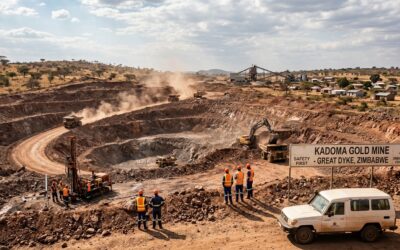
Fixed Assets and Depreciation: A Masterclass in IAS 16 and Capital Allowances Under Zimbabwean Tax Law
Overview.
For finance directors, corporate accountants, and tax consultants operating within Zimbabwe’s economic landscape, the treatment of Property, Plant, and Equipment (PPE) represents a persistent battleground of reconciliation. This friction is born from the divergent objectives of financial reporting and fiscal legislation:
- The Accounting Dimension (IAS 16): Aims to present a “fair view” of the economic consumption of an asset’s service potential over its actual useful life. It relies heavily on management estimations, componentization, residual values, and revaluation models.
- The Tax Dimension (Zimbabwean Income Tax Act [Chapter 23:06]): Operates on rigid, statutory prescriptive regimes. The Zimbabwe Revenue Authority (ZIMRA) ignores accounting depreciation entirely, replacing it with statutory Capital Allowances (Special Initial Allowance, Wear and Tear, and Scrapping Allowances) under the Fourth and Fifth Schedules. This system is designed for fiscal control, capital investment incentives, and mathematical certainty.
This masterclass provides an exhaustive, multi-disciplinary analysis of both systems. It offers corporate finance and tax advisory teams the ultimate guide to navigating fixed asset tracking, calculating complex capital allowances (including multi-currency rebasing), managing the deferred tax implications (IAS 12), and structuring robust defenses for ZIMRA tax audits.
Chapter 1: The Accounting Dimension – Deep Dive into IAS 16 (Property, Plant and Equipment)
1.1 Objective and Scope of IAS 16
The primary objective of IAS 16 is to prescribe the accounting treatment for Property, Plant, and Equipment (PPE) so that users of financial statements can discern information about an entity’s investment in its PPE and changes in such investment.
An item of PPE must be recognized as an asset if, and only if:
- It is probable that future economic benefits associated with the item will flow to the entity; and
- The cost of the item can be measured reliably.
1.2 Initial Measurement: Determining “Cost”
At recognition, an item of PPE must be measured at its cost. Under IAS 16.16, cost comprises:
- Its purchase price, including import duties and non-refundable purchase taxes, after deducting trade discounts and rebates.
- Any costs directly attributable to bringing the asset to the location and condition necessary for it to be capable of operating in the manner intended by management (e.g., site preparation, initial delivery and handling, installation and assembly, professional fees, and testing costs).
- The initial estimate of the costs of dismantling and removing the item and restoring the site on which it is located (Decommissioning Provisions under IAS 37).
The Borrowing Costs Dimension (IAS 23)
Where an item of PPE requires a substantial period of time to get ready for its intended use (a qualifying asset), borrowing costs directly attributable to its acquisition, construction, or production must be capitalized as part of the cost of the asset, rather than expensed.
1.3 Subsequent Measurement Models
IAS 16 permits an entity to choose between two subsequent measurement models for its entire classes of PPE:
                          [Subsequent Measurement]
                                     │
                  ┌──────────────────┴──────────────────┐
              Cost Model                         Revaluation Model
                  │                                     │
          Historical Cost                     Fair Value (Regular)
                  │                                     │
          Less: Accum. Depr.                  Less: Accum. Depr.
         Less: Impairment (IAS 36)           Less: Impairment (IAS 36)
1.3.1 The Cost Model
The asset is carried at its cost less any accumulated depreciation and any accumulated impairment losses (under IAS 36).
1.3.2 The Revaluation Model
If an asset’s fair value can be measured reliably, it can be carried at a revalued amount, being its fair value at the date of the revaluation less any subsequent accumulated depreciation and subsequent accumulated impairment losses.
- Frequency of Revaluations: Revaluations must be made with sufficient regularity to ensure that the carrying amount does not differ materially from that which would be determined using fair value at the end of the reporting period.
- The Accounting Treatment of Surpluses/Deficits:
- Surpluses: Recognized in Other Comprehensive Income (OCI) and accumulated in equity under the heading of Revaluation Surplus. However, if a surplus reverses a previous revaluation deficit of the same asset previously recognized in profit or loss, it is recognized in profit or loss to that extent.
- Deficits: Recognized in Profit or Loss. However, the decrease is recognized in OCI to the extent of any credit balance existing in the revaluation surplus in respect of that same asset.
- Surplus Transfer: The revaluation surplus can be transferred directly to retained earnings as the asset is used by an entity (equal to the difference between depreciation based on the revalued carrying amount and depreciation based on the asset’s original cost) or upon disposal.
1.4 Depreciation, Useful Lives, and Residual Values
Depreciation is the systematic allocation of the depreciable amount of an asset over its useful life. The “depreciable amount” is the cost of an asset, or other amount substituted for cost, less its residual value.
1.4.1 Component Accounting (Component Depreciation)
Under IAS 16.43, each part of an item of PPE with a cost that is significant in relation to the total cost of the item must be depreciated separately.
- Example: An aircraft frame, its jet engines, and its interior cabins must be treated as separate assets with distinct useful lives and depreciated accordingly.
1.4.2 Estimation of Useful Life and Residual Value
Useful life and residual value are accounting estimates. IAS 16.51 mandates that the residual value and the useful life of an asset shall be reviewed at least at each financial year-end. If expectations differ from previous estimates, the change(s) must be accounted for as a change in an accounting estimate under IAS 8 (prospectively, over the current and remaining future periods).
1.4.3 Depreciation Methods
The depreciation method used must reflect the pattern in which the asset’s future economic benefits are expected to be consumed by the entity. Acceptable methods include:
- Straight-line depreciation: Results in a constant charge over the useful life if the asset’s residual value does not change.
- Diminishing balance method: Results in a decreasing charge over the useful life.
- Units of production method: Results in a charge based on the expected use or physical output.
Chapter 2: The Tax Dimension – Capital Allowances Under the Income Tax Act [Chapter 23:06]
2.1 The Statutory Dichotomy: Disregarding Accounting Assumptions
For Zimbabwean tax purposes, ZIMRA disregards accounting depreciation completely. Section 16(1)(d) of the Income Tax Act explicitly prohibits the deduction of:
“tax upon the income of the taxpayer or interest payable thereon, whether charged in terms of this Act or any law of any country whatsoever.”
More broadly, because accounting depreciation is a non-statutory provision based on subjective estimations (IAS 16), it is disallowed under the general deduction formula of Section 15(2)(a) as it is a non-cash allocation of a capital nature.
Instead, the Income Tax Act replaces depreciation with Capital Allowances under the Fourth Schedule (for commercial, industrial, and agricultural buildings, and articles, implements, machinery, and utensils) and the Fifth Schedule (specifically for mining operations).
2.2 Key Asset Classifications Under the Fourth Schedule
To qualify for capital allowances in Zimbabwe, an asset must fall into one of the strict statutory definitions of Paragraph 1(1) of the Fourth Schedule:
1. “Articles, Implements, Machinery and Utensils”
This is a broad category encompassing plant, machinery, motor vehicles, office equipment, furniture, and computer hardware. Crucially, w.e.f. 1 January 2015, the definition was expanded to include tangible or intangible property in the form of computer software that is acquired, developed, or used by a taxpayer for the purposes of their trade, other than as trading stock.
2. “Industrial Buildings”
This is highly specific and includes:
- Buildings containing and used mainly for operating machinery worked by steam, electricity, water, or other mechanical power.
- Buildings used mainly for a hotel business (registered under the Tourism Act [Chapter 14:20]) in respect of which a liquor or casino license is held.
- Buildings used mainly for industrial research or scientific experiments.
- Buildings used mainly for storing raw materials to be used in manufacture, or goods subjected to a manufacturing process that have not yet been delivered.
- Fencing and permanent sealing of the ground area (paving) surrounding such buildings.
3. “Commercial Buildings”
Any building whose erection commenced on or after 1 April 1975, which is used to the extent of at least 90% of its floor area for the purposes of trade or in the production of income, excluding industrial buildings, farm improvements, staff housing, and tobacco barns.
4. “Staff Housing”
Permanent buildings used wholly or mainly for housing employees, subject to severe, historical, currency-specific cost caps per residential unit (governed by Paragraph 14(1) of the Fourth Schedule).
2.3 The Statutory Toolset: SIA, Wear and Tear, and Scrapping Allowances
                           [Capital Allowances]
                                    │
         ┌──────────────────────────┼──────────────────────────┐
  Special Initial Allowance   Wear & Tear (W&T)           Scrapping Allowance
   - Year 1 Option             - Annual Amortization       - Triggered upon
   - 25% or 50% or 100%        - SL or Reducing Bal.       Disposal/Scrapping
   - Claims 25% W&T in Yr 2+   - Standard ZIMRA Rates      - Equal to Tax Value - Proceeds
2.3.1 Special Initial Allowance (SIA) – Fourth Schedule, Paragraph 2
SIA is a voluntary, accelerated capital allowance that a taxpayer can elect to claim on specific capital expenditure incurred on:
- The construction of new industrial buildings, railway lines, staff housing, or tobacco barns.
- Additions or alterations to such existing buildings or structures.
- The purchase of new or used articles, implements, machinery, or utensils.
Conditions of the SIA Claim:
- The asset must be owned by the taxpayer and first put into use during the year of assessment.
- If an asset is purchased in one year but only put into use in a later year, the SIA can only be claimed in the year it is first put into use (Fourth Schedule, Paragraph 2, Proviso (i)).
- If an article, implement, machine, or utensil is leased to another person, the lessor can only claim SIA if they establish that the lessee has no option to purchase the asset, and that ownership remains completely with the lessor (Proviso (iii)).
- SIA is not permitted on half of the cost of any fiscal electronic register whose purchase qualifies for VAT relief (Proviso (iv)).
SIA Rates (Finance Act [Chapter 23:04], Chapter I, Schedule Part II)
The standard rate of SIA has evolved over the years:
- Standard Corporate Rate: 25% per annum over 4 years (25% in the first year of use, and 25% in each of the subsequent 3 years of assessment).
- Licensed Investors (Special Economic Zones): 100% (SIA is accelerated: 50% in the first year of use, and 25% in each of the subsequent 2 years under Finance Act Chapter I Schedule Part II Paragraph 9(h2)).
- Small and Medium Enterprises (SMEs): 100% accelerated over 3 years (50% in the first year of use, and 25% in each of the subsequent 2 years under Paragraph 9(g)).
2.3.2 Wear and Tear (W&T) Allowance – Fourth Schedule, Paragraph 3
If a taxpayer does not elect to claim the Special Initial Allowance (SIA) on a qualifying asset, or if the asset does not qualify for SIA (such as commercial buildings), they must claim the Wear and Tear Allowance.
- Commercial Buildings W&T: Straight-line method at a flat statutory rate of 2.5% per annum on the original cost.
- Other Assets W&T: Calculated on the cost of the asset using either the straight-line method (ZIMRA approved) or the reducing balance method.
Wear and Tear Rates on SIA Assets (Post-SIA Period)
Where SIA was elected and claimed on an asset (e.g., at 25% in Year 1), the remaining balance of the asset’s tax value is written off in subsequent years as W&T.
- Example: If a machine qualifies for 25% SIA, the taxpayer claims 25% SIA in Year 1. In Years 2, 3, and 4, the taxpayer continues to claim W&T of 25% per annum on the original cost, until the asset is fully written off.
ZIMRA Standard Non-SIA Wear and Tear Rates (reducing balance or straight-line)
Where no SIA is claimed, ZIMRA permits standard annual Wear and Tear rates:
- Industrial Buildings: 5%
- Commercial Buildings: 2.5%
- Plant and Machinery: 10% – 15%
- Office Equipment and Furniture: 10%
- Motor Vehicles (General): 20%
- Heavy Earthmoving Equipment: 25%
- Computer Hardware: 25%
- Computer Software: 20% – 25%
2.3.3 Scrapping Allowance – Fourth Schedule, Paragraph 4
When an asset is scrapped, sold, damaged, or destroyed during the year of assessment, the taxpayer can claim a Scrapping Allowance.
The Scrapping Allowance is calculated as:
Scrapping Allowance = Original Cost} – Total Capital Allowances Claimed – Disposal Proceeds/Insurance Recovery
- The Condition: The asset must have been used for the purposes of the taxpayer’s trade.
- Proviso on Non-Trade Use: If the asset was used partly for trade and partly for private purposes, the scrapping allowance is reduced proportionally based on the ratio of private use (Paragraph 4, Proviso).
Recoupments (Section 8(1)(j))
If the disposal proceeds or insurance recovery exceeds the Income Tax Value (ITV) of the asset (the original cost less capital allowances claimed), this excess is not a capital gain. Instead, it is treated as a Recoupment and must be included in the taxpayer’s gross income under Section 8(1)(j). The recoupment is taxable up to the limit of the total capital allowances previously claimed on that asset. Any profit earned above the original cost is subjected to Capital Gains Tax [Chapter 23:01].
2.4 Section 16(1)(k) – The Restrictive Passenger Motor Vehicle Cap
As detailed in the Finance Act [Chapter 23:04] and the Income Tax Act, ZIMRA imposes a strict statutory limit on the capital allowances that can be claimed on passenger motor vehicles.
Under Section 16(1)(k) read with Paragraph 14(1) of the Fifth Schedule:
- In calculating the capital allowances (SIA or W&T) on a “passenger motor vehicle” (as defined in Paragraph 14(2) of the Fourth Schedule), any cost of the vehicle exceeding US$10,000 (or its historical local currency equivalents) must be completely disregarded.
- Deemed Cost: The cost of the vehicle is deemed to be US$10,000. All calculations for SIA, W&T, or recoupments are restricted to this statutory ceiling.
Defining a Passenger Motor Vehicle
Under Paragraph 14(2), a passenger motor vehicle is any motor vehicle propelled by mechanical or electrical power intended or adapted mainly for the conveyance of passengers, excluding:
- Vehicles used wholly or almost wholly for the conveyance of passengers for gain (e.g., taxicabs, car hire, tour buses).
- Vehicles used by hotel operators for conveying guests.
- Vehicles with a seating capacity of 15 or more passengers (excluding the driver).
- Vehicles purchased by a lessor for leasing to another person, where the lessor does not give the lessee an option to purchase.
Thus, standard delivery vans, utility trucks (single and double cabs used for service), and buses are exempt from the cap, whereas executive SUVs and sedans are strictly capped at US$10,000.
2.5 Mining Operations – The Fifth Schedule Regime (SIA alternative)
Mining companies in Zimbabwe do not use the Fourth Schedule. Instead, their capital expenditure is governed by the Fifth Schedule, which has a separate set of rules and incentives:
1. Paragraph 1(1) – “Capital Expenditure”
In mining, capital expenditure is defined broadly to include:
- Expenditure on shaft sinking, buildings, works, plant, or equipment (including premiums paid for their use).
- Expenditure incurred prior to the commencement of production on preliminary surveys, boreholes, development, and general administration/management (including interest on loans utilized for mining).
- Expenditure on schools, hospitals, nursing homes, and clinics in connection with the mine.
2. The Years of Production Rule (Paragraph 2 & 5)
Under Paragraph 5(2) of the Fifth Schedule, all capital expenditure incurred by a mining company before the first year of production (the year the mine first sells or disposes of minerals) is accumulated. It is deemed to have been incurred in the first year of production and can be written off immediately:
- Exploration Expenditure: Fully written off (100% deduction) in the first year of production.
- Development Expenditure: Written off over 4 years (25% in the first year of production, and 25% in each of the subsequent 3 years of assessment).
3. Paragraph 4(2) Election – The 100% Immediate Write-off Option
Alternatively, a mining taxpayer can elect to claim an immediate 100% write-off of all capital expenditure incurred during the year of assessment. This is a massive tax shield used by large mining houses (e.g., platinum, gold, and lithium mines) to reduce their taxable income to nil during years of heavy capital expansion.
2.6 The Multi-Currency Rebasing Matrix (Section 4A and Deeming Provisions)
Because Zimbabwe’s economy has transitioned through multiple currencies (USD, ZWL, RTGS, and ZiG), the tax values of assets must be adjusted to prevent the erosion of tax shields due to inflation.
- Section 4A(11) (Rebasing of Capital Allowances): Implemented to ensure that any balance of capital allowances remaining unredeemed (uncompleted tax value) is rebased to the new local currency equivalent using the official exchange rate prevailing on specific, statutory dates (e.g., 1 January 2021, and subsequently 1 January 2023 under Section 4A(12)).
- Accounting vs. Tax Rebasing: While accountants rebase their fixed assets under IAS 21 or using revaluation models (IAS 16) to reflect current inflation, ZIMRA only permits the rebasing of the unredeemed tax balance using the official statutory exchange rates on the exact dates mandated by the Finance Act. This creates a massive, volatile divergence between the carrying amount of assets on the balance sheet and their tax bases.
Chapter 3: The Clash – Balance Sheet Reconciliation and Deferred Tax (IAS 12)
The divergent rules of IAS 16 and the Fourth/Fifth Schedules of the Income Tax Act create an annual, compounding variance in the carrying values of fixed assets, which must be tracked and resolved using deferred tax accounting under IAS 12 (Income Taxes).
3.1 Temporary vs. Permanent Differences in Fixed Assets
To reconcile the balance sheet, the finance team must categorize asset-related differences into two categories:
1. Temporary Differences
These are differences between the carrying amount of an asset on the balance sheet and its tax base (the Income Tax Value or ITV) that will reverse in future periods.
- Depreciation vs. Capital Allowances: If an asset is depreciated over a 5-year useful life for accounting but claims a 100% Special Initial Allowance (SIA) in Year 1 for tax:
- In Year 1, the Tax Base is $0$, but the carrying amount is $80\%$ of cost. This creates a Taxable Temporary Difference, resulting in a Deferred Tax Liability (DTL).
- In Years 2 to 5, as the accounting depreciation is recorded but no further tax allowances are claimed, the temporary difference reduces to $0$, reversing the DTL.
2. Permanent Differences
These are differences that will never reverse in future periods.
- The Passenger Motor Vehicle Cap (Section 16(1)(k)): If a company buys an executive passenger vehicle for US$60,000:
- Accounting: The depreciation is calculated on the full US$60,000.
- Tax: Capital allowances are strictly limited to a cost of US$10,000.
- The depreciation on the remaining US$50,000 is permanently disallowed for tax purposes. This does not create deferred tax under IAS 12; instead, it is a permanent reconciling item in the tax rate reconciliation (the “effective tax rate” disclosure).
3.2 Calculating the Tax Base of Property, Plant and Equipment
Under IAS 12, the tax base of an asset is the amount that will be deductible for tax purposes against any taxable economic benefits that will flow to the entity when it recovers the carrying amount of the asset.
The tax base of PPE is calculated as:
Tax Base (Income Tax Value) = Actual Cost – Cumulative Capital Allowances Claimed to Date
- Note: Revaluation surpluses recognized in the financial statements under the IAS 16 revaluation model do not increase the tax base of the asset. ZIMRA ignores revaluations for capital allowance purposes. Therefore, revaluing an asset increases its carrying amount, creating a larger taxable temporary difference and increasing the Deferred Tax Liability, which must be recognized directly in OCI (equity).
3.3 Reconciling the Annual Tax Charge
To prepare the ZIMRA tax return (ITF 12C), the corporate finance team must execute a clear, auditable reconciliation of the accounting profit to the taxable income:
[Accounting Net Profit Before Tax]
               │
  Add back: Accounting Depreciation (IAS 16)
  Add back: Loss on Disposal of Assets
  Add back: Impairment Losses (IAS 36)
               │
               ▼
  Deduct: Capital Allowances Claimed (SIA / W&T)
  Deduct: Profit on Disposal of Assets (Book Value)
  Deduct: Scrapping Allowances (Statutory)
  Add/Deduct: Recoupments (Section 8(1)(j))
               │
               ▼
       [TAXABLE INCOME]
Chapter 4: Judicial Precedents and Case Law
When dealing with complex disputes regarding fixed assets, capital vs. revenue expenditure, and capital allowances, tax consultants must look to judicial precedents. The following landmark cases from Zimbabwe and South Africa (given identical Roman-Dutch common law origins) are critical:
4.1 Defining Capital vs. Revenue Expenditure: The Core Tests
To claim a deduction under Section 15(2)(a), the expenditure must not be of a “capital nature.” Conversely, to claim capital allowances under the Fourth Schedule, the expenditure must be capital. The boundary between the two is defined by several classic tests:
1. The “Once and For All” Test – Vallambrosa Rubber Co. v Farmer (1910)
Lord Dunedin established that:
- Capital expenditure is spent “once and for all.”
- Revenue expenditure is recurring, made to meet a continuous or annual operational cost.
2. The “Enduring Benefit” Test – British Insulated and Helsby Cables v Atherton (1926)
Viscount Cave ruled that:
- When an expenditure is made with a view to bringing into existence an asset or an advantage for the enduring benefit of a trade, there is very good reason for treating such expenditure as capital in nature.
3. The “Income-Earning Structure” vs. “Operations” Test – CIR v George Forest Timber Co. (1924)
In this highly influential case, Innes CJ stated that:
- Capital is the income-earning machine (the structure or tree).
- Revenue is the operations of that machine (the fruit).
- Expenditure incurred in establishing, improving, or expanding the income-earning structure is capital. Expenditure incurred in operating the structure to produce income is revenue.
4.2 Zimbabwean Case Law on Capital Allowances and Asset Ownership
1. Zimbabwe Platinum Mines (Pvt) Ltd v ZIMRA (2021)
This Supreme Court of Zimbabwe case examined the valuation of mining assets and capital allowances under the Fifth Schedule. The dispute arose from the transfer of mining assets during corporate reorganizations.
- The Ruling: The Court emphasized that in calculating the capital redemption allowances under the Fifth Schedule, ZIMRA is bound by the specific valuation provisions of the Schedule.
- Where mining properties or leases change hands, the transferor and transferee must jointly submit a valuation. If they fail to do so or if ZIMRA is dissatisfied, the Commissioner has the statutory power to determine a fair market value. However, this power must be exercised reasonably and transparently, rather than arbitrarily.
2. COT v Great Dyke Investments (Pvt) Ltd
This case analyzed the boundary between exploration expenditure and mining development costs.
- The Ruling: The Court confirmed that exploration costs incurred before a mining lease is granted or before a project is determined to be commercially viable are capital in nature, but are strictly deductible only under the specific provisions of the Fifth Schedule, rather than the general deduction formula of Section 15(2)(a).
3. ZIMRA v Triangle Ltd (2023)
This case examined the tax treatment of major capital maintenance works. Triangle Ltd had incurred significant costs on the refurbishment and rebuilding of plant components. The company expensed these under Section 15(2)(b) as “repairs.” ZIMRA argued the works were so extensive that they represented a reconstruction of the asset (capital), and should have been capitalized and subjected to Wear and Tear over several years.
- The Ruling: The Supreme Court held that the rebuilding of major parts of a factory plant, which substantially extends the useful life or capacity of the asset beyond its original state, goes beyond a “repair” and represents capital improvement. The expenditure was disallowed as a repair under Section 15(2)(b) and had to be capitalized, with capital allowances claimed under the Fourth Schedule.
Chapter 5: Practical Blueprint – Comprehensive Dual-Model Walkthrough
To demonstrate how these concepts operate in practice, let us model a real-world corporate transaction.
5.1 Case Study Parameters
- Taxpayer: Bulawayo Engineering Ltd (a large corporate taxpayer in Zimbabwe).
- Asset Acquired: A state-of-the-art computer-controlled milling machine.
- Acquisition Date: 1 January 2026.
- Purchase Price (Cost): US$200,000.
- Installation and Testing Costs: US$20,000 (capitalized under both IAS 16 and ZIMRA rules).
- Total Capitalized Cost: US$220,000.
- Accounting Useful Life: 5 years.
- Accounting Residual Value Estimate: US$20,000.
- Depreciation Method: Straight-line (IAS 16).
- ZIMRA Capital Allowance Choice: Taxpayer elects to claim the Special Initial Allowance (SIA) at 25% per annum under the Fourth Schedule.
- Tax Rate in Zimbabwe: 25% (plus 3% AIDS Levy = 25.75% effective corporate tax rate).
- Accounting Measurement Model: Cost Model under IAS 16.
5.2 IAS 16 Accounting Computations (The Accountant’s Ledger)
First, we must calculate the depreciable amount and annual depreciation for accounting purposes:
Depreciable Amount = Total Capitalized Cost – Residual Value
Depreciable Amount = US$220,000 – US$20,000 = US$200,000
Annual Accounting Depreciation = US$200,000/5 years = US$40,000 per annum
Table A: IAS 16 Fixed Asset Carrying Amount Schedule
| Year | Opening Cost (US$) | Annual Depreciation (US$) | Accumulated Depreciation (US$) | Carrying Amount (Closing) (US$) |
| Year 1 (2026) | 220,000 | 40,000 | 40,000 | 180,000 |
| Year 2 (2027) | 220,000 | 40,000 | 80,000 | 140,000 |
| Year 3 (2028) | 220,000 | 40,000 | 120,000 | 100,000 |
| Year 4 (2029) | 220,000 | 40,000 | 160,000 | 60,000 |
| Year 5 (2030) | 220,000 | 40,000 | 200,000 | 20,000 (Residual Value) |
5.3 ZIMRA Capital Allowance Computations (The Tax Consultant’s Ledger)
The taxpayer has elected to claim SIA at 25% per annum. Therefore, the asset is written off at 25% per year over 4 years based on the total capitalized cost of US$220,000:
Annual Capital Allowance (SIA / W&T)} = US$220,000} times 25% = US$55,000 per annum
Table B: ZIMRA Capital Allowances Schedule (SIA at 25% over 4 years)
| Year | Original Cost (US$) | Capital Allowance Claimed (US$) | Cumulative Allowances (US$) | Tax Base (Closing ITV) (US$) |
| Year 1 (2026) | 220,000 | 55,000 (SIA) | 55,000 | 165,000 |
| Year 2 (2027) | 220,000 | 55,000 (W&T) | 110,000 | 110,000 |
| Year 3 (2028) | 220,000 | 55,000 (W&T) | 165,000 | 55,000 |
| Year 4 (2029) | 220,000 | 55,000 (W&T) | 220,000 | 0 |
| Year 5 (2030) | 220,000 | 0 | 220,000 | 0 |
5.4 The Tax Reconciliation and adjustments (ITF 12C adjustments)
Assume that Bulawayo Engineering Ltd has an Accounting Profit Before Tax of US$300,000 in each of the 5 years (before factoring in any depreciation or capital allowances on this machine).
[Accounting Profit Before Depreciation]
                     │
       Add back: Accounting Depreciation (+US$40,000)
                     │
                     ▼
       [Subtotal: US$340,000]
                     │
                     ▼
       Deduct: Statutory Capital Allowance (-US$55,000)
                     │
                     ▼
       [Taxable Income: US$285,000] ──► Apply 25.75% ZIMRA Rate
5.4.1 Annual Reconciliation Schedules (Years 1 to 5)
Year 1 (Tax Year 2026)
- Accounting Profit Before Depreciation: US$300,000
- Accounting Depreciation Expense: US$40,000
- Reported Accounting Net Profit (PBT): US$260,000 (US$300,000 – US$40,000)
Tax Reconciliation (Year 1):
- Reported Accounting Profit Before Tax: US$260,000
- Add: Non-deductible Accounting Depreciation: US$40,000
- Less: Statutory Special Initial Allowance (SIA): (US$55,000)
- Taxable Income: US$245,000
- Current Corporate Tax Due (25.75%): US$63,087.50
Year 2 (Tax Year 2027)
- Reported Accounting Profit Before Tax: US$260,000
- Add: Non-deductible Accounting Depreciation: US$40,000
- Less: Statutory Wear and Tear (W&T): (US$55,000)
- Taxable Income: US$245,000
- Current Corporate Tax Due (25.75%): US$63,087.50
Year 3 (Tax Year 2028)
- Reported Accounting Profit Before Tax: US$260,000
- Add: Non-deductible Accounting Depreciation: US$40,000
- Less: Statutory Wear and Tear (W&T): (US$55,000)
- Taxable Income: US$245,000
- Current Corporate Tax Due (25.75%): US$63,087.50
Year 4 (Tax Year 2029)
- Reported Accounting Profit Before Tax: US$260,000
- Add: Non-deductible Accounting Depreciation: US$40,000
- Less: Statutory Wear and Tear (W&T): (US$55,000)
- Taxable Income: US$245,000
- Current Corporate Tax Due (25.75%): US$63,087.50
Year 5 (Tax Year 2030)
- Reported Accounting Profit Before Tax: US$260,000
- Add: Non-deductible Accounting Depreciation: US$40,000
- Less: Statutory Wear and Tear (W&T): US$0 (Fully written off in Year 4)
- Taxable Income: US$300,000
- Current Corporate Tax Due (25.75%): US$77,250.00
5.5 Deferred Tax Calculations and IAS 12 Journals
Now, we compute the deferred tax arising from the timing differences between the carrying amount of the milling machine and its tax base.
Table C: Deferred Tax Liability (DTL) Calculation Schedule (25.75% tax rate)
| Year | Carrying Amount (A) (US$) | Tax Base (B) (US$) | Taxable Temporary Diff (A – B) (US$) | Deferred Tax Liab. (Closing) (US$) | Net Profit or Loss Movement (US$) |
| At Start | 220,000 | 220,000 | 0 | 0 | |
| Year 1 (2026) | 180,000 | 165,000 | 15,000 | 3,862.50 | US$3,862.50 (Charge) |
| Year 2 (2027) | 140,000 | 110,000 | 30,000 | 7,725.00 | US$3,862.50 (Charge) |
| Year 3 (2028) | 100,000 | 55,000 | 45,000 | 11,587.50 | US$3,862.50 (Charge) |
| Year 4 (2029) | 60,000 | 0 | 60,000 | 15,450.00 | US$3,862.50 (Charge) |
| Year 5 (2030) | 20,000 | 0 | 20,000 | 5,150.00 | (US$10,300.00) (Credit) |
Note: The taxable temporary difference decreases in Year 5 because the tax base remains at $0$, but the carrying amount drops to the residual value of US$20,000. This triggers a deferred tax credit in Year 5.
5.5.2 Year-End Deferred Tax Journal Entries (Bulawayo Engineering Ltd)
Years 1, 2, 3, and 4 (Annual Entry)
To record the annual increase in the Deferred Tax Liability due to the accelerated capital allowances (SIA) outpacing accounting depreciation:
Dr Deferred Tax Expense (Profit or Loss)       US$3,862.50
  Cr Deferred Tax Liability (Balance Sheet)                 US$3,862.50
Year 5 (31 December 2030)
To record the partial reversal of the Deferred Tax Liability as the accounting depreciation continues but no further capital allowances are claimed:
Dr Deferred Tax Liability (Balance Sheet)      US$10,300.00
  Cr Deferred Tax Benefit (Profit or Loss)                  US$10,300.00
5.6 Reconciliation of the Income Tax Charge in the Financial Reports
This reconciliation proves how the Net Profit is adjusted through current tax and deferred tax to achieve a perfectly reconciled tax expense in the financial statements under IAS 12.
Year 1 (2026) Financial Statement Tax Disclosure
- Accounting Profit Before Tax (IFRS): US$260,000
- Expected Tax Expense at Statutory Rate (25.75% of PBT): US$66,950
- Actual Tax Expense recognized in Accounts:
- Current Tax Charge: US$63,087.50
- Deferred Tax Charge: US$3,862.50
- Total Income Tax Expense in Profit or Loss: US$66,950
Expected Tax (25.75% of US$260,000) = US$66,950
Actual Tax Expense = Current Tax (US$63,087.50) + Deferred Tax Charge (US$3,862.50) = US$66,950
                     [RECONCILIATION COMPLETE: 100% ACCURATE]
Year 5 (2030) Financial Statement Tax Disclosure
- Accounting Profit Before Tax (IFRS): US$260,000
- Expected Tax Expense at Statutory Rate (25.75% of PBT): US$66,950
- Actual Tax Expense recognized in Accounts:
- Current Tax Charge: US$77,250.00
- Deferred Tax Benefit: (US$10,300.00)
- Total Income Tax Expense in Profit or Loss: US$66,950
Expected Tax (25.75% of US$260,000) = US$66,950
Actual Tax Expense = Current Tax (US$77,250.00) - Deferred Tax Benefit (US$10,300.00) = US$66,950
                     [RECONCILIATION COMPLETE: 100% ACCURATE]
Chapter 6: ZIMRA Audit Defensive Strategy and Best Practices
When ZIMRA conducts a corporate tax audit, the Fixed Asset Register (FAR) and capital allowance computations are subjected to intense, programmatic scrutiny. Because capital allowances represent a massive tax shield, ZIMRA inspectors look for common administrative and structural errors to disallow claims. To protect your business from major tax adjustments, penalties, and interest, implementing the following defensive protocols is highly recommended:
1. Maintain Separate IFRS 16 and Statutory Tax Asset Registers
Do not rely on a single asset register that only runs accounting depreciation under IAS 16.
- Your finance department must maintain a dedicated Statutory Tax Asset Register.
- This register must track the original historical cost (disregarding any revaluation surpluses), the exact date the asset was first put into use, the classification of the asset (for Fourth or Fifth Schedule purposes), the allowance rate, the allowance type (SIA vs. W&T), and the cumulative allowances claimed to date.
- Keeping these ledgers separate guarantees that you can instantly produce the Income Tax Value (ITV) of any asset when requested during a ZIMRA audit, preventing the arbitrary recalculation of allowances by tax auditors.
2. Guard Against the Passenger Motor Vehicle Trap
If your business operates or leases any passenger motor vehicles, implement a strict compliance filter inside your procurement and tax workflows.
- Ensure your tax register explicitly flags any vehicle classified as a “passenger motor vehicle” under Paragraph 14(2) of the Fourth Schedule.
- Program your tax computation spreadsheets to automatically restrict the cost of these flagged vehicles to US$10,000 on day one.
- Any capital allowances (SIA or W&T) or subsequent scrapping allowances claimed on these vehicles must be strictly calculated based on this US$10,000 deemed cost.
- If ZIMRA discovers that you have claimed W&T or SIA on the full purchase price of an executive SUV (e.g., US$80,000) instead of the US$10,000 limit, they will disallow the entire excess claim, raising a backdated assessment with a 100% penalty plus compounding interest.
3. Establish the “Production of Income” Audit Trail
To protect your deductions for capital allowances, you must be able to prove that the asset was actively used in your trade for the production of income (Section 15(2)(c)).
- Keep logbooks for motor vehicles, maintenance records for plant and machinery, and structural usage plans for buildings.
- If ZIMRA discovers during an audit that a machine or vehicle was idle, under repair, or used for non-trade purposes during the year of assessment, they may attempt to disallow the capital allowance for that year, arguing that it was not “used for the purposes of trade.”
4. Vetting the First Put-into-Use Date
A common mistake made by general accountants is claiming capital allowances (SIA or W&T) in the year the asset was purchased, rather than the year it was first put into use.
- If a machine is purchased in November 2026, but is only installed, tested, and put into production in February 2027, the capital allowance can only be claimed in the 2027 tax year.
- Maintain commissioning certificates, testing logs, and production records to prove the exact date an asset went live. During an audit, ZIMRA will compare your purchase invoice dates with your operational records; if they find you claimed allowances prematurely, they will disallow the deduction, resulting in interest and penalties.
5. Documenting Disposals and Recoupments Correctly
When an asset is sold, lost, or scrapped:
- The transaction must be matched instantly against the Statutory Tax Asset Register to calculate the exact tax recoupment under Section 8(1)(j).
- Ensure that you do not confuse the accounting “profit/loss on disposal” with the tax “recoupment/scrapping allowance.”
- Retain the sales agreements, insurance settlement letters, and bank proof of payment to justify the exact disposal proceeds used in your tax calculation.
Conclusion: Mastering the Balance Sheet
The relationship between IAS 16 and the Zimbabwean Income Tax Act is a prime example of the divergence between accounting theory and tax reality. While IAS 16 seeks to capture the economic reality of an asset’s useful life, the Income Tax Act uses fixed capital allowances to incentivize investment and simplify collection.
To ensure your business remains tax-compliant and financially secure, your finance and tax teams must master this dual-model framework. By maintaining separate, precise records and understanding the deferred tax implications, you can maximize your company’s legitimate tax shields, eliminate cash flow leakages, and successfully defend your positions during aggressive ZIMRA audits.