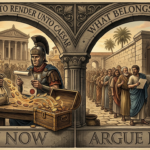
“Pay now, argue later is a pithy expression of the obligation to render unto Caesar what belongs to Caesar.”
“Pay Now and Argue Later” – A Harsh but Lawful Tool in Zimbabwean Tax Administration: What Every Business Must Know
Overview.
One of the most controversial powers wielded by the Zimbabwe Revenue Authority (ZIMRA) is the “Pay Now, Argue Later” rule. For most taxpayers, it feels punitive, coercive, and economically disruptive—particularly in an environment already strained by currency volatility, liquidity challenges, high interest rates, and inflationary pressures.
From ZIMRA’s perspective, however, the rule is a necessary fiscal safeguard, designed to ensure steady revenue inflows and to prevent abuse of the objection and appeal system as a debt‑deferral mechanism.
This article provides a detailed legal and practical analysis of the “Pay Now, Argue Later” principle using:
- Zimbabwean tax legislation
- Landmark court decisions
- Practical compliance strategies for businesses
- Lessons for both taxpayers and ZIMRA
What Does “Pay Now, Argue Later” Mean?
The “Pay Now, Argue Later” principle means that:
Once ZIMRA issues an assessment, the tax becomes immediately due and payable, even if the taxpayer disputes the assessment and has lodged an objection or appeal.
Unlike ordinary civil litigation—where an appeal suspends execution—tax law adopts the opposite approach.
This principle is not administrative policy; it is directly embedded in statute.
Statutory Basis in Zimbabwean Tax Law
Income Tax Act [Chapter 23:06]
Section 69(1) provides that:
“The obligation to pay tax and the right of the Commissioner to receive it shall not be suspended by any objection or appeal.”
This provision grants ZIMRA the right to demand and collect tax immediately after issuing an assessment, regardless of pending disputes.
Value Added Tax Act [Chapter 23:12]
Section 36 mirrors the Income Tax Act:
“The obligation to pay tax shall not be suspended by the fact that an objection or appeal has been lodged.”
VAT disputes—particularly those arising from audits, input VAT disallowances, or currency conversion issues—are therefore subject to prompt enforcement.
How the Rule Is Enforced in Practice
ZIMRA has wide-ranging recovery powers, including:
Agent Appointments (Garnishee Orders)
Under Section 58 (Income Tax Act) and equivalent provisions in VAT law, ZIMRA may appoint:
- Banks
- Customers
- Debtors
- Employers
as agents of the taxpayer to recover tax directly from funds due or held. [lucent.co.zw]
Importantly, no court order is required.
Distress and Attachment
ZIMRA may seize assets, stock, or vehicles without first resolving the dispute.
Denial of Tax Clearance
Non‑payment, despite an objection, often results in suspension of tax clearance, crippling operations for:
- Importers
- Contractors
- Suppliers to government
Why the Rule Exists: Policy and Fiscal Rationale
Zimbabwean courts have consistently recognised that:
- The State depends on predictable revenue
- Tax appeals can take years
- Without this rule, the fiscus would be held hostage to endless litigation
The Supreme Court confirmed that the rule’s primary beneficiary is the fiscus—not the taxpayer.
Key Court Decisions Shaping the Rule
Packers International (Pvt) Ltd v ZIMRA
The court famously stated:
“Pay now, argue later is a pithy expression of the obligation to render unto Caesar what belongs to Caesar.”
Key lesson:
An assessment creates a debt due, not a negotiable claim.
Fairdrop Trading (Pvt) Ltd v ZIMRA
The High Court rejected attempts to suspend recovery merely because an objection had been lodged.
Lesson:
Urgency caused by enforcement does not entitle taxpayers to interim relief.
Mayor Logistics / Main Road Motors Cases
Courts confirmed that only the Commissioner‑General, not the courts, has discretion to suspend payment pending appeal.
Delta Corporation Ltd v ZIMRA (2025)
Delta paid US$9.2 million under the rule while still litigating a US$74 million dispute.
The Constitutional Court dismissed attempts to bypass tax courts, reinforcing strict adherence to statutory remedies.
Business reality:
Large, compliant corporates are not immune.
Is the Rule Constitutional?
Taxpayers have argued that the rule violates:
- Section 69 – Right of access to courts
- Section 71 – Protection of property
However, courts have upheld the rule as a justifiable limitation in the public interest.
Tax is a public law obligation, not a private contractual dispute.
The Commissioner’s Discretion to Suspend Payment
Both the Income Tax Act and VAT Act allow the Commissioner to direct a suspension of payment in limited circumstances.
However:
- The statutes provide no clear criteria
- The discretion is exercised sparingly
- Refusal does not stop enforcement pending review
Practical reality:
Suspension is the exception, not the rule.
IFRS vs Tax Law – A Common Misconception
A critical error among businesses is assuming that:
“If accounting treatment is correct under IFRS, ZIMRA must accept it.”
This is incorrect.
- IFRS governs financial reporting
- Tax liability is governed strictly by statute
- Courts have repeatedly confirmed that tax law overrides accounting standards
This distinction is especially relevant in:
- Exchange differences
- Revenue recognition
- VAT timing differences
- Capital gains vs revenue classification
Practical Impacts on Businesses
Cash Flow Strain
Immediate payment can:
- Disrupt operations
- Force expensive borrowing
- Trigger covenant breaches
Strategic Risk
Litigating while paying requires:
- Deep liquidity
- Strong documentation
- Long‑term stamina
Compliance Burden
Poor records magnify exposure, especially in multi‑currency environments.
Practical Guidance for Businesses
✅ Before an Audit
- Maintain tax‑ready records
- Reconcile VAT and PAYE monthly
- Avoid aggressive interpretations not supported by law
✅ During an Assessment
- Engage ZIMRA early
- Quantify worst‑case exposure
- Consider voluntary disclosure where applicable
✅ After an Assessment
- Budget for payment even if disputing
- Apply for suspension (with strong evidence)
- Ring‑fence funds to avoid garnishee shock
Lessons for ZIMRA
- Transparency builds compliance
- Clear guidelines on suspension discretion are overdue
- Proportional enforcement reduces litigation fatigue
Conclusion
The “Pay Now, Argue Later” rule is harsh—but lawful.
For businesses in Zimbabwe, the key realisation is this:
Tax disputes are not cash‑neutral events.
The issuance of an assessment triggers:
- A legal debt
- Immediate enforcement rights
- Financial consequences irrespective of merit
Survival depends on proactive compliance, strategic cash planning, and informed engagement with ZIMRA, not on hope that litigation will delay payment.