Implications for Businesses, Households, and National Growth Targets
Global Geopolitics and Local Economic Shock
The renewed escalation of tensions involving the United States, Israel, and Iran has sent profound shockwaves through global energy markets, pushing Brent crude oil prices beyond US$100 per barrel during 2025–2026 and reigniting fears of sustained supply disruption through strategic chokepoints such as the Strait of Hormuz, which accounts for nearly 20% of global oil trade.
For Zimbabwe, a landlocked, fuel‑import‑dependent economy with limited strategic reserves, this global shock has translated almost immediately into higher domestic fuel prices, compounding structural vulnerabilities such as logistics inefficiency, currency fragility, energy insecurity, and fiscal constraints.
Fuel, unlike many commodities, functions as a universal input. Its price affects every productive sector, from forestry and agriculture to retail services and health delivery. As a result, fuel inflation operates as an indirect tax on production, employment, and household welfare, threatening to undermine Zimbabwe’s medium‑term growth targets of 6–7% set out in Treasury and World Bank projections.
Fuel as a Transmission Mechanism of Cost‑Push Inflation
Structural Dependence and Price Inelasticity
Zimbabwe imports virtually 100% of its refined fuel, primarily through Beira and Durban, before transporting it over long inland distances by road. In such a context, fuel demand is highly price inelastic in the short run—businesses cannot abruptly halt operations without collapsing output.
Consequently, fuel price hikes translate into cost‑push inflation, where increased input costs force firms to raise prices not because of excess demand, but to preserve survival margins. [lucent.co.zw]
Compounding Domestic Price Elements
While global oil prices form the base, Zimbabwe’s pump prices remain among the highest in Southern Africa, reflecting duties, levies, inland transport costs, financing charges, and procurement inefficiencies.
This means global shocks are amplified locally, not merely transmitted.
Sectoral Impact on Businesses
Construction and the Timber Price Surge
The construction sector provides a clear illustration of fuel‑driven inflation, particularly through timber prices, which have surged by 20–30% in certain urban markets over the past year.
Fuel affects timber through multiple channels:
- Diesel‑powered harvesting machinery
- Transportation from Eastern Highlands plantations
- Milling and processing energy
- Cross‑border imports from Mozambique and South Africa
Given existing structural shortages in Zimbabwe’s forestry sector, rising diesel prices magnify scarcity effects, pushing timber beyond the reach of small‑scale builders and informal housing developers.
The result is higher construction costs, deferred projects, and reduced employment intensity in one of the economy’s most labor‑absorptive sectors.
Agriculture: Mechanisation Under Threat
Agriculture, targeting growth recovery after El Niño disruptions, has been hit particularly hard. Diesel prices exceeding US$2.10 per litre have raised the cost of:
- Irrigation pumping
- Land preparation
- Harvest logistics
- Cold‑chain transportation.
Small‑scale commercial farmers report scaling down irrigated acreage, while horticultural producers face spoilage risks due to rising transport costs.
This threatens not only farm incomes but urban food security, reinforcing inflationary feedback loops.
Mining and Energy‑Intensive Production
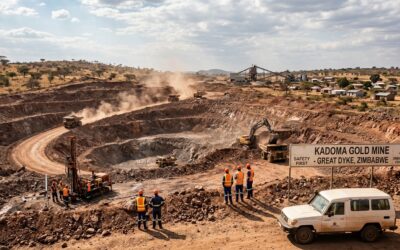
Mining, Zimbabwe’s leading foreign‑currency earner, is highly energy‑intensive. Beyond haulage, fuel powers:
- Underground equipment
- Generator‑based electricity back‑up
- Mineral beneficiation processes.
Higher diesel prices raise unit production costs, compressing margins at a time when global mineral price volatility already challenges profitability. For marginal operations, fuel inflation can mean temporary shutdowns or retrenchments, reducing export growth momentum.
Retail and Services: Margin Compression
Retail chains and service providers face a double‑edged shock:
- Rising distribution and utility costs
- Consumer resistance to price increases due to weak disposable income
This leads to margin compression, reduced reinvestment, and in some cases store rationalisation.
Service sectors—transport, health, education, and logistics—suffer similarly, with fuel surcharges becoming unavoidable yet socially contentious. [lucent.co.zw]
Impact on Individuals and Households
The Disposable Income Squeeze
Fuel hikes operate regressively, disproportionately affecting low‑income households that spend larger income shares on transport and food. Transport fares in urban centres have risen by 50–100% following fuel adjustments.
Because food prices are logistics‑intensive, households experience compounded inflation:
- Higher commuting costs
- Rising staple food prices
- Increased school and health service charges
This erodes real wages, deepens informality, and heightens vulnerability among fixed‑income earners such as pensioners and civil servants.
Informal Sector Fragility
The informal economy absorbs over 60% of Zimbabwe’s labor force. Fuel price volatility directly undermines:
- Cross‑border trading viability
- Urban vendor restocking
- Informal transport services.
Reduced turnover translates into declining household resilience and increased reliance on remittances, weakening domestic demand—the main driver of service‑sector growth.
Macroeconomic Implications and Growth Targets
Threat to GDP Growth Projections
Zimbabwe’s medium‑term growth targets—between 6% and 7.5%—assume moderate inflation, rising investment, and productivity recovery.
Fuel‑driven cost inflation undermines all three assumptions.
High energy costs:
- Discourage capital formation
- Reduce competitiveness of exports
- Suppress aggregate demand
According to J.P. Morgan estimates, sustained oil prices above US$100 could lower global GDP growth by 0.6% annually, with higher proportional effects on import‑dependent economies like Zimbabwe.
Inflationary Risks and Policy Dilemmas
Fuel hikes place policymakers in a bind:
- Absorbing shocks via subsidies worsens fiscal deficits
- Passing costs fully to consumers fuels inflation and unrest
Zimbabwe’s remaining fiscal space is limited by high public debt and arrears, constraining counter‑cyclical responses.
Strategic Policy Considerations
To mitigate the structural damage from fuel volatility, analysts point toward:
- Expanded rail freight to reduce road‑haulage dependence
- Improved fuel procurement transparency to narrow regional price gaps
- Accelerated renewable energy adoption, especially in agro‑processing
- Targeted sectoral relief, rather than blanket price controls
Such interventions align with Treasury’s long‑term resilience agenda but require sustained policy discipline and investment credibility.
Conclusion
The fuel price shock emanating from the US–Israel–Iran geopolitical crisis has exposed and intensified Zimbabwe’s structural economic vulnerabilities. From soaring timber prices and strained farmers to squeezed retailers and burdened households, fuel inflation acts as a universal stress multiplier.
If unmitigated, persistent high fuel prices threaten to derail growth recovery, employment creation, and poverty reduction objectives. Yet the crisis also reinforces the urgency of long‑postponed structural reforms—energy diversification, logistics efficiency, and fiscal transparency.
Zimbabwe’s growth targets remain achievable, but only if fuel ceases to function as a chronic tax on productivity and instead becomes a stable input in a rebalanced, resilient economic model.